Showing posts with label circles of friends. Show all posts

28/01/2013

The Art of Talking

29-1-2013, Krommenie. Talking with neighbours, friends, family is in our DNA, so talking with colleagues and potential clients could be part of that DNA too.  

Yet that is not how people experience networking, according to the participants in an introduction to the work of NETSHEILA last Friday in Krommenie.

The event was part of the program of Ondernemend Krommenie - the entrepreneurs club in our village. Started in 2012, we have enjoyed presentations from the local secondary school, the notary, the undertaker. I offered to give a presentation in the style of a NETSHEILA workshop, one of the successful NETSHEILA products that people from Melbourne to Addis Ababa to Wageningen have experienced and enjoyed.

Who was in the room? Builders, painters, accountants, electrical specialists, teachers, floor specialists, coaches. People who don't often sit with each other and ask for things they need. We did an exercise.  I asked where they wanted their business to be in 5 years time, what they need for that to happen, who they need to make that happen and how Ondernemend Krommenie can support them in reaching their business goals. As one of the participants told me this morning, it was a very enjoyable way of spending time with each other and he learned more in that 20 minute exercise than is normal in a conversation. People shared tips on how to be with clients. On keeping clients. One person needed more floorspace, another had the space.

It was a very useful conversation.


This is networking. When I told people that what they had just been doing was 'networking', some people looked surprised. They had a presupposition that networking was putting on a fake smile and passing out your visiting card. "Slimy" is the word often associated with networking. No. No. No. What networking is, is talking to people about things that matter to you. Connecting. Finding ways of being useful to each other and having fun at the same time. In other words, building community.

As the day wound to a close I got a message from a neighbour.  Our water pipe in the front garden had burst and could I come quickly to turn off the water. As I rushed out the door one of the participants called his plumber and told him to be on standby in case I needed him. When I arrived home, four neighbours were in front of my house dealing with the burst pipe. Community. Its not difficult. II don't think they had a lot of fun in the freezing cold, getting wet and dealing with my tap. Yet somehow there was a sense of belonging, trust, being there for each other. I hope they enjoy the gift of thanks I brought them.

27/12/2012

Building Your Network for Your 2013 Career

-->
“In the new workplace we’re seeing greater emphasis on relationships,” says Brian Kropp, a managing director at CEB in this month's edition of Forbes. He attributes this interest in how relationships add value to the workplace to the economic crisis, and notices that employees who have been in the company for longer are at a far greater advantage. According to CEB research, longer-tenured workers are beginning to rise to positions of success more quickly than those who move every few years.

The Forbes article suggests making use of your ability to create relationships by choosing to work with others, and to share your ideas.

Don’t Be A Loner
In the new workplace, 40% of employees work with more than 20 people on a given day, and more than 80% work with 10 according to CEB research. “The idea that you can be an individual contributor and be successful is an idea of the past,” says Kropp. “Fitting within the network of the workplace is a part of the new definition of a great employee.”

Be A Thought Leader
All of that knowledge you’ve gained by reading up on the industry? Make a habit of sharing it. “Write articles, make presentations, serve on panels or blog,” she says. “People need to have confidence in you that you know what you’re doing and that you’re willing to use it to help other peoples’ problems.”

See the Big Picture
There are many employees who only focus on what they’re doing, which prevents them from seeing the big picture. Find out what your co-workers are doing. Find out what other departments are doing and link to them. By getting a better understanding of the big picture, it will become clearer to you why you’ve been asked to complete certain projects. 

This new research underlines the main message of NETSHEILA: you are part of a circle of colleagues, friends, relatives and acquaintances. Said differently, you exist within a network of people and you form an essential link between your organisation and those people. The people are potential resources. When you to tap into this vast resource you benefit  yourself and your organisation. The more effective you become at building relationships, the greater you train yourself as an asset in "people economics"  the more valuable your contribution becomes to projects and processes.

Seeing yourself as an asset in the economy of people, you start to look differently at the economic crisis.
NETSHEILA engaged in projects in 2012 where people discovered they can get more done with less effort, simply by tapping into the relational networks of their colleagues.  As one university teacher wrote: "The NETSHEILA half day workshop in discovering the secrets of networking was very valuable to me, and to our team. Just look at the contact information I was given for people who can provide me with information as I develop my new curriculum". At the same time, the way people look at time shifts. People feel overwhelmed an overworked when working alone. When people share their knowledge of how the system works at their workplace, of how to get things done more effectively, who to speak with, and who can be a resource in a specific area, the idea that there is not enough time to get everything done begins to diminish. It is replaced by an idea of being able to do more, with a team.

As the year comes to an end, we at NETSHEILA offer you a simple framework for developing yourself as a person who builds relationships and adds value to your organisation by making use of those relationships. 

  • Define a big goal for yourself that has to do with the people you know and want to get to know.
  • Think carefully about whether this goal is as fun for you as it is for the organisation. You are in charge of balance, no one else!
  • Define specific, measurable and time bound milestones to reaching that goal.
  • Be very clear about the conditions for satisfaction of each milestone. Make life easy for yourself by knowing beforehand how you define success.
  • Be aware that your big goal is a huge contribution to other people. So share your goal with other people and let them contribute to you.

 Lin McDevitt-Pugh

======================
Lin McDevitt-Pugh is the founder and director of NETSHEILA, a company dedicated to working with organisations and individuals to expand their ability to transform the networks of relationships they already have into resources to improve the quality of the workplace. Call +31 6 150 68468 to discuss how your organisation can benefit from working with NETSHEILA  or write to admin@netsheila.com.


08/11/2012

A Culture of Standing Aside

-->
In the McKinsey Quarterly published this week, I was impressed by an article entitled The Global Gender Agenda. I couldn't resist a letter to the editor, as I felt we need to vamp up the discussion of diversity in relation to women at the top. 

The authors encourage committed leaders to take on four priorities:
1. Treat gender diversity like any other strategic business initiative, with a goal and a plan that your company monitors and follows up at the highest levels over many years.
2. Ask for—and talk about—the data, sliced and diced to identify ‘pain points’ in the pipeline by business, geography, and function.
3. Establish a culture of sponsorship, encouraging each top executive to sponsor two to three future leaders, including women.
4. Raise awareness of what a diverse work environment looks like, celebrating successes to reinforce the mind-set shifts you desire.

I would like to include diverse diversity in the conversation. Diversity looks at difference, how we are all somehow oddballs, even those of us that the others think are ‘the norm’.  We are all men, or women, sometimes in bodies that match our gender, sometimes not. But we are more than that. We are richly layered personalities and each of us is good at something irrespective of the visible outer casing we come with.

So far, the discussion on gender in business has concentrated on women being given the space to grow and develop.  The four excellent tips in this article similarly look at how to promote a greater possibility of women at the top through promoting women in the pipeline.  There is nothing wrong with this. However, one major behavior remains unaddressed: the culture of standing aside is not being developed.

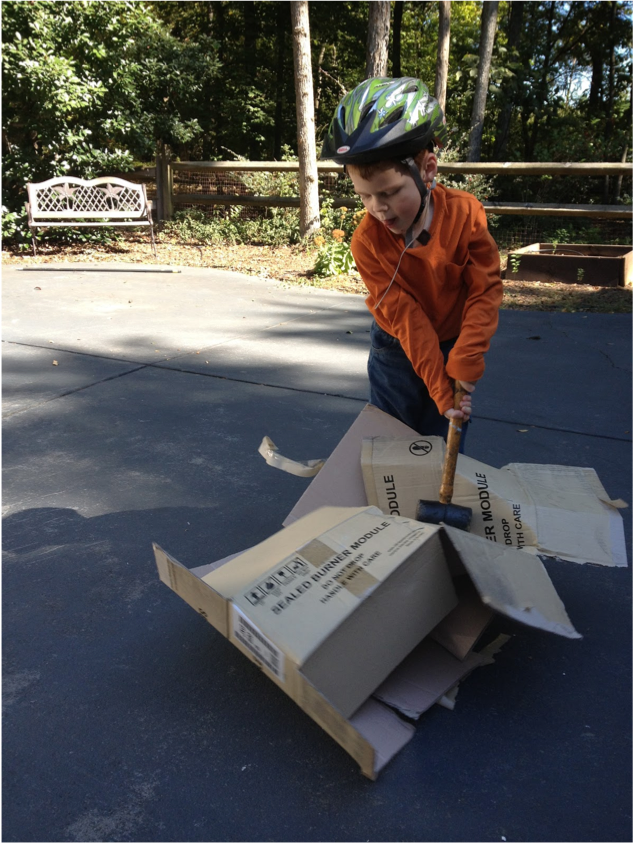
A culture of standing aside would seem counter-productive to a business seeking success. If there are people who ‘naturally’ rise, why would a company go out of its way to invite them to stand aside and give their place to someone equally valuable to the organization and with a different style, different skill sets? It doesn’t make sense, right. And it doesn’t make sense all down the line. It doesn’t make sense for the parents of naturally inquisitive and expressive little boys who recklessly experiment and who seem set for surviving in life, to say “Now, dear, why don’t you stop bashing up that box and give it to the little girl so she can make a bed for her dolly”.  At school, where teachers are committed to providing kids of all sorts with a great education, we will be hard pressed to see a teacher teach boys to stand aside and give girls the space to develop a different style of leadership. Yet what will make a difference in future boardrooms is developing a culture of respect, and giving space, to diversity in the classroom.

Without a culture of standing aside we will get more, lots more, of the traditional male approach and we will continue to struggle to include otherness in our business culture.

This is where diversity training becomes a tool in gender mainstreaming.  Where gender mainstreaming as a concept is based on human rights principles, diversity management is based on noticing that difference is what is missing, and difference makes the difference. Competitive advantage is never based on everyone having the same product based on the same knowledge and the same capacities in staff. Competitive advantage, as Porter (1980) argued, is based on uniqueness.  Bringing companies to the next level will depend on harnessing diversity. With that, our communities will have to learn to value the differences in girls and boys and make sure that boys and girls learn to give each other space in the classroom.


Lin McDevitt-Pugh

------------
At the core of Lin McDevitt-Pugh's work is a passion for freedom, exploration and respect for all people. Lin is the Director of NETSHEILA, a company she founded three years ago to provide management expertise in connecting organisations to the most valuable resource they have: the people they know or could know.

04/11/2012

Culture of Cooperation = Networking

How do networking skills change the way people work?

Imagine a work environment where people beg you not to give them any more work, because they are overloaded as it is. Imagine promising this group of people that by participating in a networking leadership course for three afternoons in a 3 month period, they will experience their work as being more fun and they will get more done with less effort.

This is the promise of a project designed to promote a culture of cooperation that NETSHEILA is presently undertaking in a school environment in the Netherlands.


 The people

Before looking at how this promise is working out, let me introduce you to the project. It takes place at a secondary school with thousands of students and many many staff. My client loves being an educator and wants his staff to have the best environment possible in which to do their work. The teachers in the project were hand picked by my client. From the moment we met I could tell they are passionate about teaching. They have a busy load, and one of their challenges is to carry the load and stay positive about their work. They are passionate about what they do. They are delighted to be teaching, proud to be the people who are educating the young people in our community. They work closely with the students to surmount problems and they celebrate wildly when the students are successful. They give themselves fully to their job. They really do work hard. And they are willing to test run a project that is designed to improve the quality of the work environment at the school.

Outside of school hours they are also passionate. I am working with teachers who live full lives outside school hours. One is a volunteer at a radio station and has been for years. Another loves to build things for people, and one business administration teacher with one little child and one on the way converted her attic into a kitchen where she makes delicious cakes and pastries. One person is secretary of a car-lovers society, another runs the local ice-skating club, a third trains kids to be Olympic champions in judo. 


Defining the need

On the first afternoon, everyone was asked to think of a task or a plan or an issue that they have on their plate that is bigger than what they can deal with alone. They are assured that having something on your plate like that is a sign of strength. After all,  if you can deal easily with all the challenges you face, your game is too small. If you are up to something big, you need other people.  I defined this ‘something’ as a need.

Everyone could easily think of something. They then shared with the three other people at their table what their need was. 


Ding that people are social assets

Putting their need aside, people then proceeded to map out their circles of friends and acquaintances. Some noted the categories of people, others the people themselves.  Friends from college friends from school, friends from previous work situations, people they play sports with, family, colleagues, and on and on. 


Matching needs to assets

Each table of four then took one for one the needs people had described, and looked at who in their community map could be useful for that person.  Even if they felt they could help the person themselves, the purpose of the exercise was to see what other human resources they as an individual have that they can provide their colleagues.

Everyone left the first afternoon with a need that was concretely expressed, and with an understanding of conversations they could have in and outside school that could easily help them work further on this need.


Concrete results

Twenty days later the group came together for a second afternoon. The intention of the afternoon was to take the knowledge of connecting to people to the next step, creating a culture of cooperation at school. A lot had happened in 20 days.  One teacher had been able to overcome management failings in her department by asking to be assigned the role of section head, and getting the role. The other section heads in our group freely offered to support her in developing herself in this new role. Others had found the space they needed to sit together with their team and plan. Another had started conversations with various people to find the money he needed to implement an innovative plan. When one teacher declared he hadn’t done anything relating to the need he had expressed, two other people let him know they had taken up his issue and big progress had been made. 
 
After 20 days teachers were experiencing their work as being lighter and they were getting more done with less effort.


Moving toward a culture of cooperation

The challenge is to create that ease and lightness in a structural way, which is why we then proceeded to working on developing a culture of cooperation.

Tribal Leadership, the work done by the good folks at CultureSync, forms a basis for developing this culture.


The 5 stages of culture

Tribal Leadership distinguishes 5 stages of culture existing in the world of work.
Stage 1 is Life Sucks. Researchers Dave Logan an others found 2 percent of companies in their 10-year study to fall within this category. I see stage 1 as mainly the realm of criminal societies, where there is no empathy for others and it is an environment of shoot or get shot. Having said that, I can think of plenty of examples where people try to trip up their colleagues to avoid getting tripped up themselves.

Stage 2 is My Life Sucks. It seems to the individual that everyone else is doing fine, its just a pity that their own life isn’t where it should be. When asked if they will do something this people in this culture say “I’ll try”, but they won’t commit.

A stage 2 culture can advance into (and not step over) a stage 3 culture. “I’m Great!... and the Others Are Not.” Why did that project fail? The other people were not of a good enough quality.  Why did you not get the job you wanted? Someone else had the boss’s ear. About 49 percent of organizations function within the culture.

A stage 4 culture says “We’re Great” and while there is rivalry in that (the implication is that the others, the competition, is not great) there is a sense that we can work together to get things done. This is a culture of cooperation, and 22 percent of organizations function at this level.

Then there is stage 5, which is a great place for saints like Bishop Tutu and the Dalai Lama to dwell but most of us can be pretty satisfied if we manage to operate consistently in a stage 4 culture. At stage 5 the dominant expression is “Life is Great”.  

The structure of the environment in each stage is key to the capacity for organizations having cultures like these to be cultures of cooperation. Stage 5 cultures are an interlinkage of integral units. At Stage 4 the working units are integrated. At Stage 3 management operates the hub and spokes method: tell me everything an don’t disturb your colleagues by telling them what you are up to. At Stage 2 there is little adequate management and at Stage 1 the actor is outside the culture, looking in.

In other words, to have a culture of cooperation the best place to be is in Stage 4. Or stage 5 (Good luck on that).


Consistent at stage 4

At our school, we are working on developing a culture of cooperation where the participants are consistently operating at Stage 4. And to do that, the advisors at CultureSync say, people have to be able to operate in triads. Triangles are powerful structures.  Each side of the triangle keeps the other side in place. In a triad, each person listens to the expressed intention of the other two people. The expressed intention is the thing that inspires the person to undertake something that is bigger than him or herself. The genuine desire to educate kids, for example. To not be stopped when there is not enough money for projects, or not enough other teachers wanting or willing to participate in a project, but to keep going, keep looking for that funding, keep enrolling those teachers to participate because educating kids takes courage and effort. Each player at Stage 4 regularly checks in with two other people to have the discussion: are you acting in a way that your intentions will be realized. These two people are not necessarily colleagues. They just have to be people who are committed to you being successful. They are your committed listeners.


Practice

The teachers have now formulated shared projects, taking some of the needs expressed in the first session to the level of projects. They have triads supporting them in focusing on their intention, helping them to not get bogged down in the rejections, the complaints, or the negativity that Stage 3 people around them will possibly place in their pathway.  The coming 6 weeks is a time of practicing being consistently in Stage 4. 

Lin  McDevitt-Pugh
===========
Lin McDevitt-Pugh MBA, owner of  NETSHEILA, is a management consultant with a particular expertise in creating cultures of cooperation in the workplace.  With a culture of cooperation, organizations can realize big goals through fun, ease and connectivity. Call +31 6 150 48468 to see how NETSHEILA  can support your organization. We work in Dutch-language and English-language environments.

18/10/2012

When Staff Peek Into Each Others Address Books

At a large secondary school in Krommenie, NETSHEILA is working with a selected group of teachers to start a process that will create a culture of cooperation in the school.

We have only just begun and already the results indicate that bringing people together who have a passion for what they do and a passion for why they do it, supports them in being successful. The school has over 1700 staff members. It is unlikely that a metalwork teacher and a Dutch language teacher would sit at a table together. Even more unlikely is for them to have an intimate conversation about projects they are working on that need resources beyond what they currently have. And because they had exactly that conversation together, the metalwork teacher discovered that the father of the Dutch teacher owns a metal workshop in a nearby town and could be one of the people he needs for his larger-than-life project.

It is not even a coincidence that, when you put four or five people around a table, one of them has resources another may need. Most people have a vast network of friends, relations, and acquaintances that they have known since childhood. They have hobbies. They have connections through their faith, their sport. In a NETSHEILA network training our goal is to make use of the fact that people are social animals. We focus on organizations that have big commitments. With the staff, we look at the social capital available in the room, the people resources. NETSHEILA advocates bringing the outside world into the work environment. Rather than taking "life" (family life, private life) out of "work" we operate on the assumption that when people in the community are connected, the community works.

In the next phase of the project we will create strategies to implement the ideas people have, using the social capital resources available in the school. Imagine, in the example above, that the metalwork teacher gets in touch with the Dutch teacher's father and they start working together on a project that involves the students. If you are worried that a person's private resources are being used by the school and that that is not quite right, consider the following scenarios. Will the Dutch teacher be upset that her personal resources are being exploited for the school? I doubt it, and I can imagine that at home a new conversation can start about the school and how it is working with the community. Will the father be upset his daughter talked about him at school? Given that he has now been given an opportunity to find new staff and support the teacher to train them while they are still in school, I doubt that too. Should the school be upset that people are bringing in outside resources - both human resources (the father) and economic resources (his workshop)? Hardly: the school can use all the support it can get in fulfilling its social duty to educate young people an give them experiences now, in a protected environment, that will be useful to them when they enter the next phase of their lives.

A NETSHEILA workshop interrupts the "work-life" dichotomy by giving permission to participants to see their friends and family as social actors that have meaning beyond the bounds of their personal relationship. Without fail people who know each other, and people who don't know each other, begin to ask the questions. Why they do this is simple: they are committed people and they know they can't do everything alone. They grasp with both hands the opportunity to work with colleagues to have everyone be successful. A school is up to big things and when the staff works together, the resources in the form of social capital are endless.

The researcher Granovetter coined the terms "weak ties" and "strong ties" to distinguish the linkages between people. Strong ties are what you find in families. People have each others back. People know each other. In poor communities, people are often tightly bonded. What they miss is ties to other groups. In areas or zones of high unemployment, few people know people with jobs, so they can't ask friends for a job and they have few people to mirror or learn their own work-related behavior. "Weak ties" are the links to other communities, other people. In the case of the metalwork teacher and the Dutch teacher, the Dutch teacher was a weak link to the metalwork workshop and all the resources that entails in the nearby town. The teachers at this school have renamed the terms "Open Links" and "Closed Links" as they associate "weak" with "inadequate". A justified choice.

Metal statue by Annemie de Wit honoring the children's book series Kameleon, written by Hotze de Roos in Krommenie


====
Lin McDevitt-Pugh MBA is management consultant with a particular expertise in involving networks in your organizational goals. The intention is to support big goals by bringing in fun, ease and connectivity. Call +31 6 150 48468 to see how NETSHEILA can support your organization. We work in Dutch-language and English-language environments.

16/09/2012

Entrepreneurial Krommenie

September 16, 2012 Krommenie. Krommenie has a very new initiative for the business community,  Ondernemend Krommenie (OK for short and Entrepreneurial Krommenie in English) and so far we have been meeting every four of five weeks since the Spring of this year.

For people outside the Netherlands you are forgiven for not knowing where Krommenie is. It is a small town 25 minutes by train north west of Amsterdam, bordering on the industrial city of Zaandam and in the middle of a vast wetlands and farming area. My wife and I moved here 9 months ago. We are delighted to live in a community and still easily access our work and clients.

Tech school students built this aviary in a park in Krommenie
60 people have showed interest in OK and at the end of the summer we had 10 people around the table at our most recent gathering.  A dynamic group, very diverse, and very open to communication. The founders posed the question: what do you want this group to be for you? 

It is a good question to reflect on.

The first meeting I attended was impressive. A teacher who runs the Business Point at the local technical school, TRIAS VMBO, described a project in which the school, a local entrepreneur and the local council cooperated. The woodwork teacher wanted a work experience project for the students, the council wanted to give the aviary in the park a makeover and a local entrepreneur recognized the importance of giving young people a chance to learn the profession he is in. This gives him hope in the future that he will find the staff he needs as he develops his business into the next decade. An unexpected by-product of the project is perhaps one of the most important elements of all: the students feel a proud ownership of what they have achieved and they protect their project against vandalism. They have become part of and not ancillary to the community.

As someone who is excited by the power of connections,  I was delighted by this story. It acknowledges the power of locality and of people working together to produce results that are intended and to be willing to produce great results they could not even imagine being possible. The story gives access to the potential of OK as a network.

As I mingled and met my fellow local entrepreneurs I met a graphic designer, Renée Vrijman, who is passionate about communication. I was touched, moved and inspired by her story and invited her to make my new business card. I shared with her and her business partner (who is also her father) what my business is, and she translated that story into a logo. It represents diversity, networks, connectedness, the world, and bright futures for those who choose to work with the people around them.

Because she was local, I felt an extra layer of trust in the partnership. 

At our end of summer OK discussion, a woman shared some of the dilemmas she is facing with her newly opened Clothing Bank that was set up to cater to the same clientele as the food bank. Many of the clothes are new, from outlets, and the fashions are modern. When the shop opened earlier this year there was a lot of local media interest. Yet many people have not yet found their way to the shop, As she shared the story with the group, many good questions were asked and useful suggestions made. The owner later posted on the group's LinkedIn site that she was already benefiting from the results of this conversation.

Many of the customers of the Clothing Bank come for the social contacts. From the perspective of network theory, this is great news - and one of the unintended benefits of the shop. Very poor people have very limited social circles, and the more weak ties - or connections to people outside the inner circle of family - poor people have, the greater their access to resources that can take them out of poverty.

In a nutshell, the OK network already provides a number of benefits to its members.
  • OK has brought new business to some of the members, and new business contacts to all of us. 
  • In our discussions, we share knowledge and in this way even small businesses get access to diverse professional input.
  • We hear about the latest developments in the community.
  • By talking together, we create community. 
So what could we be doing in the future?

First, keep doing what we already do.
A characteristic house on main street

The entrepreneurs in OK could also explore whether we want to promote Krommenie as a tourist destination. 

OK can see if it wants to play a role in promoting local businesses, or take up issues like parking, or look from a business perspective at what facilities the people in the town need.

NETSHEILA has many examples to share when looking for inspiration in developing OK as a networking group for local business people. If you have ideas or would like to discuss potential partnerships with Ondernemend Krommenie, feel free to get in touch.
=======

Lin McDevitt-Pugh is director of NETSHEILA and her business is working with people to access the contacts and people around them. She can be reached on +31-75-6152295, or via the contact form.


25/07/2012

Organizing the LGBTI ALMS Conference - a Networkers Paradise


Amsterdam, 25 July 2012: If you want to contribute to social change, you get the main actors together and work out how to effect that change successfully. I am currently organizing a conference that aims to change the experience that gay men, lesbians, bisexual,  transgender and intersex (LGBTI) people have when interacting with heritage institutions.
An international conference is the working space a network organization expert like myself dreams of.

 Our vision is that when a young lesbian visits her national archive in  Europe or North America in 2020 she will easily discover lesbians in history, women living their lives fully. She will find lesbian artists in museums.  She will find lesbian novels in libraries. She will find that she is part of the ‘we’ that is society. As will gay men, bisexual and transgender people. And ‘society’ will notice that ‘we’ includes LGBTI people.

In this short essay I will dwell on where, in the process of organizing a conference, networked organization expertise help make outstanding results.  Networked organization expertise uses various tools in finding the players that are so essential in achieving the results you want. It also acknowledges that the circles of friends, relations and contacts in which each and every player is situated has the potential to provide value to the larger group. Value can come through the possibility of getting in contact with strategic partners (structural value), creating a sense of community and trust that supports players in developing challenging projects in their own circumstances (relational value) and building knowledge that allows participants in the network to gain ground (cognitive value). As a networked organization expert, my job is to bring all these levels of value to the project.

1. Defining the vision
When we started working on developing this conference, my client, the International Gay and Lesbian Information Centre and Archive (IHLIA) wanted to establish a network of LGBTI archives, libraries and documentation centres in Europe (both EU and non-EU countries). It is part of an international group of people working in LGBTI archives, libraries, museums and special collections (ALMS) that have met in the USA three times over the past decade. They call their meetings the ALMS conference. Most participants were from North America and a sprinkling, like my client, came from further abroad. When the call came at a previous conference for volunteers to organize the next conference came, IHLIA offered and was chosen.

I was hired to develop the concept of the conference and to take it – whatever ‘it’ was – from there.  Rather than taking the intention to set up a network as an ambition, I encouraged my client to first get a firm grasp on the vision of the conference. What change did they want to see happening in the world, as a result of their efforts?  Establishing the vision is a necessary first step to knowing the change you want to see in the world three years or more down the road and set up the team to begin the process of making that happen.

We asked a lot of questions when preparing for this visioning process. For one, how did IHLIA see its role in the Netherlands and beyond? What were its ambitions for the future? What resources did it have already and what resources did it need?  The organization had a strategic plan, but that did not give direct answers to the question of what value did the proposed conference have in meeting the longer and shorter term goals of the organization.  From this line of questions it became clear that the board and the management team should be part of the visioning process. It also became clear that key stakeholders in the Netherlands were clients such as researchers and people representing research institutions.

In the end we had three external stakeholders and three internal stakeholders involved in the visioning process.

Because the conference has an international history we realized there was, besides the IHLIA board, a whole community in the world with expectations of the next conference. We decided to test the vision against these expectations. We also felt it prudent to have buy-in from important stakeholders, to create a shared ownership of the idea of an international networking activity that would commence after the conference. We established an international advisory group. The  group comprised people who knew each other from the previous conferences plus, as the vision had a European-wide action radius, from organizations IHLIA knew or found in various parts of Europe.

After discussing the vision with the international advisory group, an important addition was made. Not only would mainstream heritage institutions make their LGBT content visible and accessible, grassroots LGBTI ALMS organizations would flourish. This is an acknowledgement that leadership in making LGBTI heritage accessible has always come from organizations within the LGBTI community. Great leaps forward happen when collaboration between mainstream and community organizations takes place.

2. Getting the right people to the table
We used stakeholder analysis, a key tool in networked organization, to find people for the advisory group as well as potential participants and speakers. In a stakeholder analysis, the client puts aside existing ideas of who ought to be involved and looks at the vision. What parties affect the outcome?  Who has a strong interest in the success of the vision and how much power do they have. By charting the relative position of stakeholders, the client begins to get a sense of what strategies are need to make the vision a reality. For example, they will see that some organizations that are key to success are powerful but not interested. Others are not powerful but very interested.
One conclusion of this exercise was that the program should be focused on bringing new actors to the conference. If, by 2020, cultural heritage organizations in Europe and North America make LGBTI history visible and accessible, we needed as many partners in the mainstream cultural heritage world that we could find.  This meant that in the outreach program we had to focus on people known to the client and people not yet known to the client.  

Networks add value at a structural, relational and cognitive level
Finding people we do not yet know is the playground of a networked organization expert.  In the networks surrounding each and every one of us there are “weak” and “strong” ties – concepts coined in the 1970’s by a researcher by the name of Granovetter. “Weak” ties are the connections we have with people outside our immediate (family, work) affiliations that give us access to deals, knowledge, tips and connections. They are not part of our “circle” and our circle gives us access to them.

Here are two good examples of how we used the structural value of networks to find the people that could help make our vision a reality. To find archivists throughout Europe who may be interested in working with us in the future, we used our connection with the director of the Dutch National Archive.  He is a leader in the international community of archivists and he enabled us to have access to the relevant email addresses.

When IHLIA’s director recently visited London, she had an experience that led to the creation of a new weak link. She came across a permanent ‘trail’ at the British Museum, pointing out the various objects of same-sex desire exhibited throughout the museum. These objects are and always have been part of the permanent collection, and since the advent of the 'trail' visitors can easily find them. The British Museum provides visitors with a folder , available at the front desk.  Keen to get in touch with the people behind the trail, our interns dug deep and found the person responsible. We invited him as a keynote speaker to the conference. As a representative of a world-renowned heritage institute he is an important binding element between mainstream and community heritage organizations at the conference.

We used network theory to define the content of the conference. Network theory has it that the whole is made up of the sum of the parts, and the magic that happens when these are brought together. It is not the act of bringing together that causes magic, it is how people are brought together that make a difference. We all have experienced reading a book in which many ideas from different people are collected. It does not often have the feeling of magic to the reader – although the process of creating the publication may have been magical to those involved. The magic at a conference happens when the knowledge that one person has, is purposefully added to the knowledge another person has, and that they together create something new. The program was developed cognitive value of networks with this in mind. The program looks at what exists, what tools and resources there are and leaves space for developing the many divergent sorts of collaborations that are possible when community and mainstream organizations meet and share ideas, knowledge and ambitions. In fact, the program also acknowledges that we live in connected times and that there is no reason to wait till some time in the future to pour our ideas into a room. This was the reasoning behind creating a blog on which all contributions were shared before the conference. In this way, the participants could use their value face time at the conference to get to the point of the conference: creating collaborations to make out vision possible.

We developed the relational level of the conference purposefully. If this conference is to be a starting point for future collaboration, people need to know and trust each other.  They also need to have a sense of community of like-minded people. The job at hand – the future we are living into of LGBTI history being visible and accessible in every country in Europe and North America, is for some people quite daunting. We know for example that the Slovenian national archive does not accept the existence of the lesbian archive and has actively worked, unsuccessfully, to close it down. In the Ukraine and Russia, talking about homosexuality in public places has just been declared punishable by law.

For these reasons, an important part of creating the conference is creating a common ground, a meeting place of people sharing the same values, vision an goals. By setting up a facebook page, with its built in mechanisms for sharing and getting to know others interested in any specific field or subject, and by presenting information through the conference blog, the conference established itself as a set of relationships, even before the conference started. These relationships extend beyond the people in the room. They will be friends of friends and they will be needed in the next phase of realising the vision. Clearly, the people in the room at the conference will not be able to make the vision happen on their own. They will need a community. A vast network of people who stand in a future that says that ‘we’ are part of this great thing called ‘society’, its history and its future.

The proof of the pudding
At this point, with the conference about to happen, we do not know how the participants will take the vision and ensure its implementation. We do know that the future will be caused by actions. These actions will have predictable and unpredictable results. They are already happening. While we were preparing the conference, the librarian of a European capital city received our invitation to participate in the conference shortly after attending a meeting on women in the library world. At that meeting, a young woman presented a very emotional statement. She was upset because while the position of women in society were discussed, there was never reference to lesbians. The librarian listened and was moved. She happened to come from the same place as the young woman. When my invitation to attend the LGBTI ALMS 2012 conference arrived a week later she knew what she had to do: work with the young lady to make material that is relevant to lesbians visible and accessible in her library. In a way, our work was done in that city before the conference happened. What we anticipate is that all through Europe, librarians, museum personnel, archivists and people running special collections will find ways of making their LGBTI content visible and accessible. That is our vision.
=========

Lin McDevitt-Pugh MBA

Lin McDevitt-Pugh is director of NetSHEila and expert in networked organizations. She provides training to schools, universities, public and private companies and employee networks, supporting them to do more, with more fun, by utilizing the circles of people in which they operate. 
For more on the conference, see the conference website.

14/03/2012

Mobilize Networks Workshop


The NetSHEila Mobilize Networks workshop trains organizations to get the most out of the circles of people surrounding their employees and key stakeholders, from a business perspective. These circles are social capital, and social capital is an economic resource.  The workshop is used in strategic development processes.

Participants in workshop, which has been given in the Netherlands, Africa and Australia, consistently rate the workshop high on relevance to their work situation and to their development needs.

"It was an excellent, educating, knowledge-expanding workshop. I appreciate the expertise and quality of the facilitator. I will encourage others to take the workshop." Woman entrepreneur, Ethiopia

"A useful opportunity to begin the process of consolidating our approach to networking." Professional fundraiser, Australia

"Well-structured and planned and I got a lot out of it and can see there is a lot to do in this area." HR professional, Australia

 
The workshop consists of a basic module, in which participants are trained to be ready to network wherever they are. 

The basic module usually fills the morning.  It is fun, gets people connected, and has lots of practical knowledge in it. In the remaining 1, 2 or 3 half days of the workshop, clients can choose which other modules will benefit them at this point in their strategic development.

The modules offered in the Mobilize Networks workshop are:

BASIC MODULE: The three secrets of networking, network theory
MODULE 2: Diagnose your network
MODULE 3: Building and expanding your network
MODULE 4: Working in a networked way
MODULE 5: How employee networks can operate skillfully
MODULE 6: Professional networks
MODULE 7: Stakeholders as networked actors
MODULE 8: Resource Mobilization
MODULE 9: Social networking
MODULE 10: Gender analysis


About Lin McDevitt-Pugh

Lin McDevitt-Pugh MBA is a management consultant, project developer and manager in the public sector, private sector and civil society. With a background in human rights and networking, she works with organizations to move the conversation from “This is not how it should be” to “This is how it will be”.
Lin gets very excited when she trains organizations in working with people as creative economic resources.  By mobilizing the resources we all have at our fingertips - the people we know and the people they know - we can create unique knowledge, build trust and access the people and institutions we need to access.

13/03/2012

Leading Ladies Masterclasses


International Women’s Day news this week:  there is some growth in the number of women company supervisors and board members in Europe, but if we are going to reach the EU's goal of 30% by 2015 and 40% by 2020, we will have to put in twice the effort. The current rate of growth puts us at 40% by 2040, according to the Dutch newspaper, NRC. At present, only one in seven board members of publicly listed companies is a woman.

Stichting De Beuk and NetSHEila intend to be part of the movement to shift the balance in the Netherlands.  De Beuk has developed a program called Leading Ladies, and together with top women leaders offers a series of weekend sessions to work with women to position themselves in powerful roles.

NetSHEila provides the weekend on networking, in October 2012. We will look at the contacts  - the friends, colleagues, families, old school buddies, acquaintances that each participant brings to the weekend and develop strategies to utilize these in claiming leading roles. The NRC Weekend article highlighted the way women who are in positions of power presently go about acquiring these roles. They get most positions by responding to advertisements. As Pamela Boumeester (53), former CEO of the Dutch rail NS Poort said "We have to make the rules ourselves. Don’t forget I am the first generation of full-time working women in this country. We don’t have a blueprint to work from, we invent our careers ourselves.“  

At NetSHEila, we think there are networking strategies that can be used more effectively to bring more speed to the process of bringing more women to  board rooms and supervisory boards. For one, de Beuk has delivered programs supporting women with political ambitions for over 25 years and has a unique database of effective leading women. Bringing these women and their networks of contacts together provides an excellent platform for finding the right woman for the job.

For more information on the program, don’t hesitate to contact either Wilma Ruis of De Beuk or Lin McDevitt-Pugh of NetSheila

Lin McDevitt-Pugh MBA is a management consultant, project developer and manager in the public sector, private sector and civil society, based in the Netherlands. With a background in human rights and networking, she works with organizations to move the conversation from “This is not how it should be” to “This is how it will be”.
Lin gets very excited when she trains organizations in working with people as creative economic resources.  By mobilizing the resources we all have at our fingertips - the people we know and the people they know - we can create unique knowledge, build trust and access the people and institutions we need to access.
Contact: mcdevitt-pugh@netsheila.com


12/03/2012

The Value of LGBT Networks to HRM


March 8 2012. At a spacious, tastefully designed bar in the heart of Amsterdam, about 100 people in business clothing gathered for the monthly gay, lesbian, bisexual, transgender (LGBT) business drinks. As I move around the room I see a good mix of men and women of all ages, and I hear people speaking Spanish, Dutch and English. Many of these people work in transnational corporations. I meet a Latina who recently joined Cisco and is looking to meet people. I run into a client who previously set up the gay and lesbian network in her company. I chat with a friend who, like me, did his MBA at Henley and who now talks with companies throughout Europe about the importance of having policies to improve efficiency by ending any form of discrimination against gay, lesbian, bisexual and trans employees.


I have been asked speak at this event and to briefly share the results of my research into the added value of corporate LGBT networks to companies. I love opportunities like this to share with people how powerful they are.

My research began exactly 4 years ago, when I dropped into the monthly drinks on my way to celebrate International Women’s Day elsewhere. I had just completed my final exam of the MBA and was looking for a research project. David Pollard, one of the forces behind the establishment of the network of professional and corporate LGBT networks now known as Workplace Pride, knew exactly what I could do. I could research, from a business perspective, the contribution of LGBT networks to a company’s bottom line.

I quickly discovered that this approach was revolutionary. Henley Business College had never had a Masters dissertation – that I could find - relating to gay and business. Most literature on gay and business relates to the difficulties of being LGBT in the business environment – an LGBT as victim approach. That is because in most countries, LGBT’s lack many rights, including in the workplace. The Netherlands, by contrast, has granted LGBT people by law almost every conceivable right. What value can LGBT networks offer under these circumstances?

Issues

Laws are one thing, reality is another. LGBT people in the Netherlands are still the brunt of jokes, and even today 30% of gay employees do not dare to be openly themselves at work. While many managers have no issue with a person’s sexuality, others do.  Working in an international climate, being 'out' in the Netherlands is one thing, but how will it affect an employee's potential to go on foreign postings? Some employees fear the consequences of being completely open, in every situation at home and abroad. Others are fearless, but have a nagging sense that by being so they may miss opportunities.  LGBT networks in companies are addressing these and other issues.

Bottom line

What does this have to do with the ability of a company to run a profitable business? One of the tenets of Human Resource Management theory is that competitive advantage means building a workforce that is unique, imperfectly imitable and with no strategic equivalent. Attracting and retaining talent is important to the bottom line, as is utilizing the people – their skills and competencies. Said differently, a company’s assets and resources, its resource combinations and its organizational competencies only have value when they are combined with the skills of the individual and their social networks. My research challenge was to come up with a convincing argument, with concrete examples, that a corporate LGBT network contributes to the profit of its company through its contribution to HR strategies for competitive advantage.

Results

For my research I interviewed network leaders, network members and HR officers in each of the six companies that at that time made up Company Pride Platform. There are at least 5 ways in which corporate LGBT networks contribute the to the bottom line:

1 LGBT networks contribute to finding the right people for the company

The networks are working with the companies to create an environment that is attractive to a diverse workforce. A major focus of several of the networks was participating in Canal Pride. Canal Pride is fun, exuberant and has a pro-gay message. The presence of the corporate networks generates visibility for the company on the day, positive coverage on TV and in relevant industry recruitment publications. HR and network respondents firmly believe this is good for business and good for recruitment strategies. 

2 LGBT networks help companies utilize employees

While line managers are responsible for ensuring that the employees perform in their jobs, the LGBT networks utilize the employees beyond the relationship defined in the professional contract. Most networks pass on information to HR about what works, and what is not work, for LGBT employees and make suggestions on what could be done better.
The networks cross the hierarchical lines, contributing to the company’s ability to adapt to the changing needs of clients, changing economic conditions, and changing perceptions of the social environment.

3 LGBT networks build social capital

Building a company’s social capital enables people to act collectively, for the benefit of the company.  The networks address issues of engagement, sharing of information, cross-silo engagement in strategy development. They also look at where people are being excluded. They create safe spaces where people can explore the question “Is it me, or is there something really going on out there that is making me uncomfortable?” HR sometimes utilizes the networks to learn why people join the company and why they leave.

4 LGBT networks create economic and reliable business resources

The LGBT networks build trust, and act on the trust to share information with each other and with other parts of the organization, including HR. Strong ties among colleagues can translate into economic and reliable business resources, which contributes to the competitive advantage of the company. Most of the networks help the company develop internal efficiencies by creating communication pathways, sharing information relating to HR issues, marketing issues and company products between different sections of the company.

5 LGBT networks link and leverage knowledge within the company

The companies are starting to tap into the knowledge and the external networks of the networks, mainly around recruitment and utility issues . Workplace Pride plays a significant role in developing knowledge that is specific to the issue of homosexuality in the workplace, and at conferences and meetings networks share data, statistics and best practices that are helpful to all their companies.

Scoping LGBT networks within the company

Where do we go from here?

Each network exists in a unique HRM environment. The networks are emerging as professional, social and intellectual exchange networks. In some cases they are partnering with HR in attracting, recruiting and motivating talent at all levels, including the elusive Generation Y employee.
They have the potential to do much more.  Networks could be building more bridges. The structures are there. The networks could be utilized more in recruitment strategies and in gaining access to Gen Y. Employees that are recruited through personal networks come with a ready-made relationship with the company that can positively affect their engagement and their motivation. In their networks of friends and family, network members have potential specialists, contractors and trustworthy market-based staff.

Workplace Pride recently launched the Declaration of Amsterdam, with 10 items on how to design a workplace that works for LGBT people. Networks can use this Declaration as a guideline for their own strategic plan: what exists already in their company, what has yet to be developed? Events like the monthly Workplace Pride drinks are a perfect opportunity for network members to inquire of other networks what they do, what works, what doesn’t work. Ask what they are proud of. Listen with wonder at what they have achieved and what their goals are. Share your own experiences. And bring in experts to work with your network to make more happen, with greater ease.

By Lin McDevitt-Pugh
Lin is owner of NetSHEila, a company specialized in maximizing the value of relationships between people to companies an organizations. She has delivered strategic network development workshops to corporate LGBT networks, business networks and international NGOs in The Netherlands, Africa and Australia. She can be contacted on +31-6-150 48468 or through the contact form on www.netsheila.com. Follow her tweets via @LinMcDevittPugh.